










Archaeologists discover huge US Revolutionary War graveyard at battlefield site

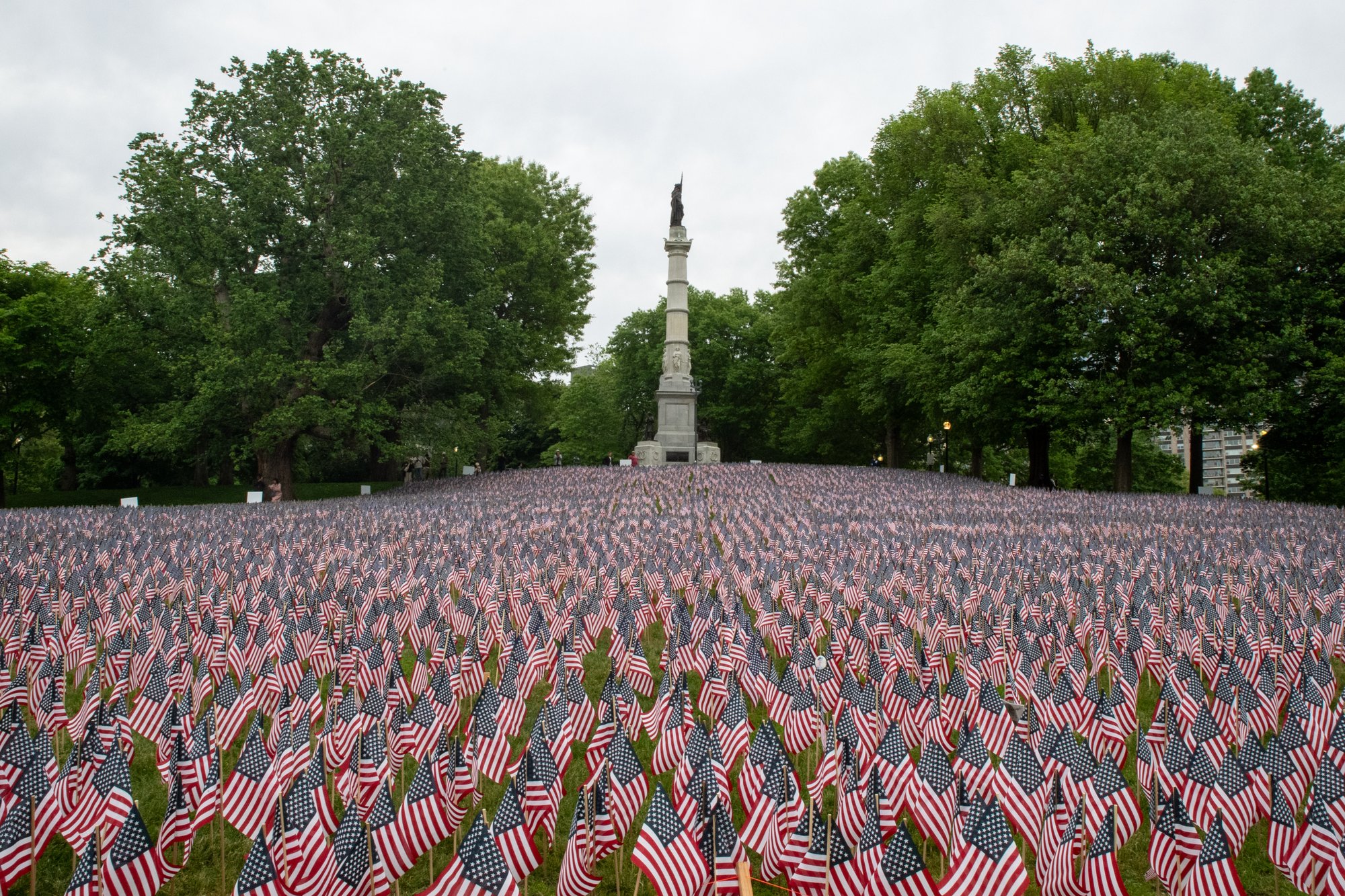
Archaeologists have discovered a huge US Revolutionary graveyard at a former battlefield site.
During a summer excavation at Red Bank Battlefield Park in southern New Jersey in 2022, a volunteer tentatively approached the professional archaeologists on site and uttered five words that would reshape understanding of a Revolutionary War engagement: "I think I found a bone."
That modest discovery in a ditch outside the ruins of Fort Mercer triggered what has become one of the most remarkable battlefield finds in the United States in decades. The bone belonged to one of 15 Hessian soldiers believed to have been killed during the 1777 Battle of Red Bank and buried without ceremony the following day.
"We had begun to archaeologically survey the site, never expecting that this unassuming parcel would become among the most significant spots in the park," wrote Jennifer Janofsky and Wade Catts, both of Rowan University, in The Conversation.
The Battle of Red Bank took place in autumn 1777 as part of the broader Philadelphia campaign.
General Howe had defeated Washington's Continental Army at Brandywine on September 11 before seizing Philadelphia a fortnight later.
Seeking to secure his own supply routes, Howe dispatched a Hessian brigade to storm Fort Mercer. Together with Fort Mifflin, the fortification guarded the Delaware River, shielding Washington's logistics and denying the British a vital waterborne approach.
Colonel Christopher Greene — a third cousin of General Nathanael Greene — held the fort with two Rhode Island regiments. His troops inflicted a devastating defeat, killing upwards of 100 German soldiers and wounding scores more. It ranked among the Continental Army's earliest victories over the feared mercenaries.

In 2021, Gloucester County acquired a modest quarter-acre plot bordering the park, a routine purchase that proved anything but ordinary. The land contained an undisturbed section of Fort Mercer's original trench works.
When the excavation team returned to work following the volunteer's find, they spent the entire sweltering summer painstakingly recovering human remains from the site. In total, bones belonging to 15 individuals were unearthed, each numbered sequentially as they emerged.
The New Jersey State Police Forensic Anthropology Unit contributed significant resources to the project. The extraction demanded extraordinary care — no complete skeletons survived intact. Instead, the archaeologists retrieved fragments: skulls, jawbones and thigh bones, all in poor condition after nearly two and a half centuries underground.
Battlefield artefacts recovered alongside the remains left little doubt about who these men were. Buttons, buckles and musket balls pointed unmistakably to Hessian soldiers — the German troops Colonel Greene had ordered thrown into a ditch beyond the fort's walls the morning after the engagement.
LATEST DEVELOPMENTS
- British scientists fighting to save rare snail 'as precious as Egyptian artefact'
- Schoolteacher stumbles across world's first known T-Rex footprint trail in astonishing discovery
- Bizarre creature caught on film for first time ever lurking miles below surface of sea

The skeletal evidence painted a harrowing picture of eighteenth-century combat. One set of remains, designated No 7, told a particularly grim tale. The soldier was discovered lying face down at the base of the fort wall, his body bearing the marks of three separate projectiles: a lead musket ball to the right hip, a lead canister round striking the centre of his back, and a piece of iron grapeshot — roughly the size of a golf ball — embedded in his left arm.
Other remains bore witness to yet more fearsome ordnance deployed by the Pennsylvania Navy. A bar shot, resembling a heavily weighted dumbbell, and a chain shot — two cannonballs connected by a length of chain — were designed to spin through the air upon firing, tearing through anything in their path.
As the archaeologists observed, bones function as artefacts capable of revealing truths that conventional written records often miss.
Professors Janofsky and Catts have argued the find presents "an opportunity for more nuanced interpretations of who and what constitutes the enemy".
They wrote: "Rather than seeing the battle as good guys versus bad guys, we encourage people to consider the space in between. These men never anticipated being dumped in a New Jersey ditch so far from home."
Yet the Hessians were elite professional soldiers, counted among the most disciplined fighting forces in the Western world. A fuller reckoning with their legacy must also address why American colonists loathed them even more intensely than the British.
After the Battle of Long Island, both American and British witnesses reported Hessian grenadiers bayoneting soldiers who had surrendered. Across New Jersey, their units systematically ransacked civilian properties belonging to Whigs and Loyalists alike, driving previously neutral colonists into the revolutionary cause.
Contemporary church records, including those of Lutheran pastor Henry Melchior Muhlenberg, documented assaults on non-combatants, women and children among them.
Our Standards: The GB News Editorial Charter
What's Your Reaction?
 Like
0
Like
0
 Dislike
0
Dislike
0
 Love
0
Love
0
 Funny
0
Funny
0
 Angry
0
Angry
0
 Sad
0
Sad
0
 Wow
0
Wow
0