


























Archaeologists uncover remarkable Ice Age 'Venus' models carved from mammoth ivory

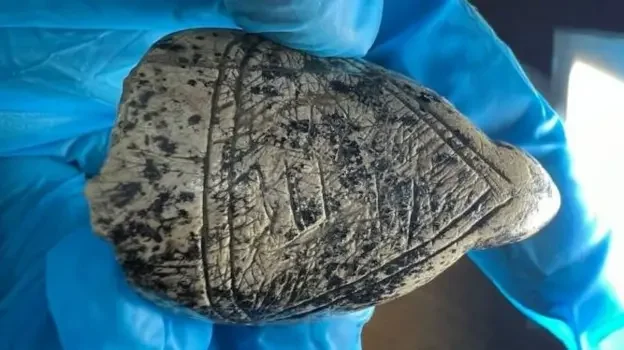
Archaeologists have discovered that elaborate engravings on 18,000-year-old "Venus" figurines were directly inspired by the natural growth patterns in mammoth tusks.
The research, published in the journal npj Heritage Science, examined 18 ivory figurines unearthed at the Mizyn campsite in northern Ukraine and found that prehistoric artisans closely studied and replicated the organic lines visible in the raw material to guide their decorative carvings.
An international team from the University of York, the University of Stavanger in Norway, and the National Museum of the History of Ukraine conducted the analysis, which they said upends conventional thinking about the development of Stone Age artistic traditions across Europe.
The ongoing conflict between Russia and Ukraine severely restricted physical access to the artefacts, which are held at the National Museum of the History of Ukraine in Kyiv, making digital methods indispensable for both study and long-term preservation.
Researchers employed 3D digital modelling alongside high-resolution microscopic examination to scrutinise the figurines' surfaces in unprecedented detail.
The recording of the objects formed part of urgent cultural heritage safeguarding work spearheaded by the Ukrainian NGO Archaїc.
Specialists from Ukraine, Norway, Germany, and the United Kingdom collaborated on the project.
They brought together expertise in archaeology, digital heritage, and material analysis to unlock the secrets of these remarkable Ice Age carvings.

The study determined that carvers deliberately wove Schreger and Owen lines, the distinctive growth rings naturally present in mammoth tusks, into the decorative patterns adorning the figurines' surfaces.
Researchers also identified a notable hiatus of between 1,000 and 3,000 years in figurine production across Europe.
This corresponds with the Last Glacial Maximum, the most extreme cold phase of the last Ice Age.
Dr Aimée Little, from the University of York's archaeology department, said: "This discovery offers an extraordinary window into how Palaeolithic peoples perceived and engaged with their material world."
LATEST DEVELOPMENTS:
- Archaeology discovery of rare Roman painting reveals ancient artistic technique
- Boy, 8, unearths remarkable Bronze Age spearhead during Lake District day out
- Archaeologists uncover feathers that shine light on 66 million-year-old dinosaur mystery

Dr Andrew Needham, also at York, said: "When figurine making re-emerged around 18,000 years ago it began earlier in Eastern Europe than in the West."
He added: "This indicates that Ice Age artists in Eastern Europe forged their own independent artistic path rather than simply following trends from Western Europe."
Dr Little further described how mammoths were woven into artistic traditions, through both the use of their ivory and the intentional reproduction of its natural patterns, as "a genuine breakthrough in our understanding of prehistoric art and material culture".
Simon Radchenko, a researcher at the University of Stavanger's Archaeological Museum, said continued digital investigation would "shed more light on the emergence and development of artistic expression in Europe, showing an even more complex and intriguing picture than we have now".
Oleksandr Naumenko, of the National Museum of the History of Ukraine, stressed that the conflict continues to endanger Ukraine's cultural heritage.
He argued "creating high-quality digital records of artefacts is a crucial step in preserving them".
Dr Dmytro Kiosak, of the Leibniz Centre for Archaeology, said: "Our findings challenge the long-held assumption that ancient art simply evolved in a straight line from basic to complex forms."
Our Standards: The GB News Editorial Charter
What's Your Reaction?
 Like
0
Like
0
 Dislike
0
Dislike
0
 Love
0
Love
0
 Funny
0
Funny
0
 Angry
0
Angry
0
 Sad
0
Sad
0
 Wow
0
Wow
0