




























Adorable new cat species identified for the first time in more than 100 years

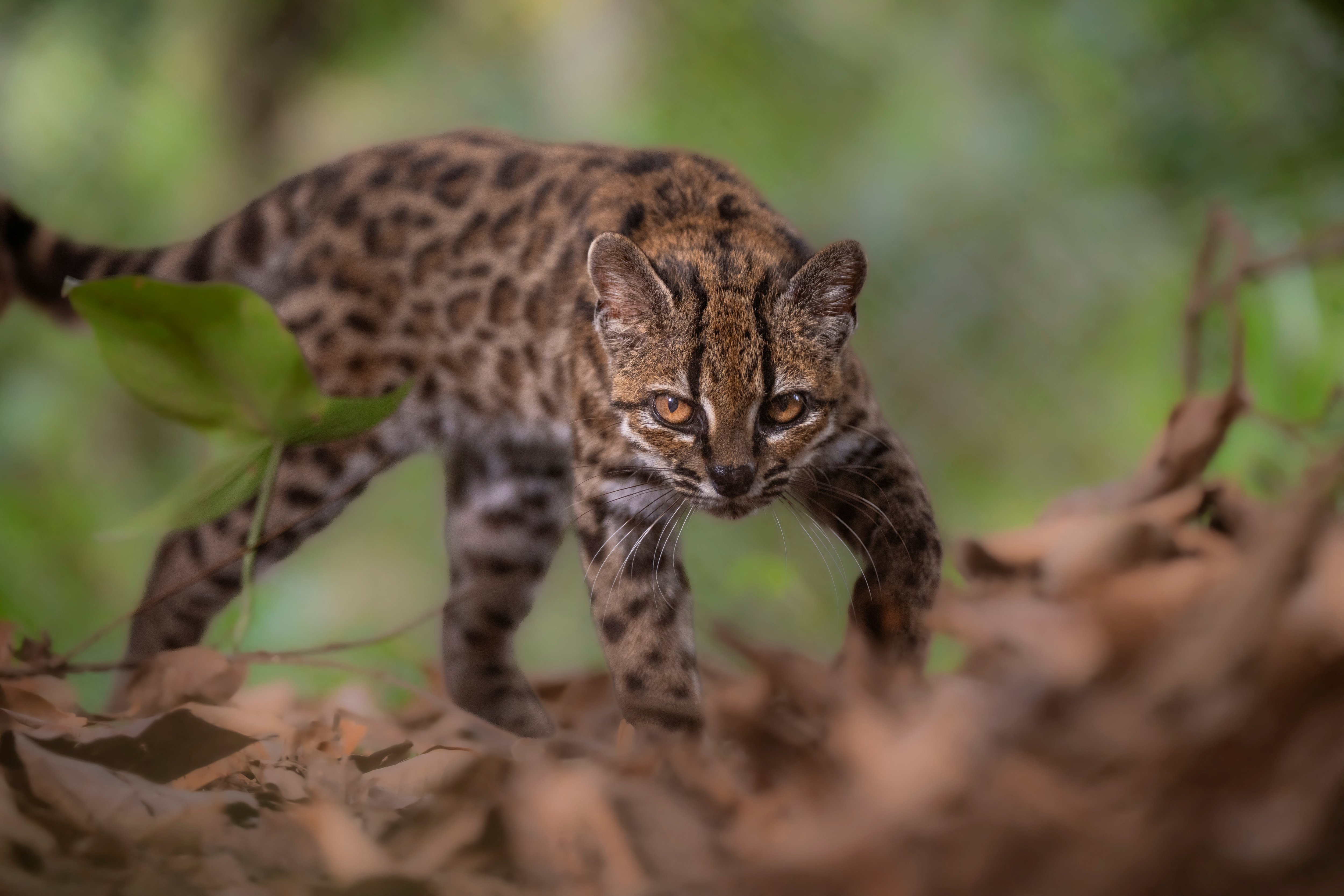
Scientists have formally identified a tiny wild cat living in Bolivia's misty mountain forests as an entirely new species.
Known as the Tilcayo by local communities, it is the first time a living feline has been newly named and described in over 100 years.
The cat has been given the scientific name Leopardus tilcayo, with the species belonging to a group of South American felines referred to as tiger cats.
Weighing roughly 3lbs and measuring approximately 18 inches in length, the Tilcayo is notably smaller than a typical house cat.
The Tilcayo was discovered in Bolivia's Yungas forest, a lush mountainous region characterised by persistent cloud cover and high humidity.
"Its fur is light brown ... with irregularly shaped rosettes across its body," said Paola Nogales-Ascarrunz, a National Geographic Explorer and co-author of the study.
Researchers still know relatively little about how the cat lives. Analysis of scat samples revealed remnants of small rodents, hinting at what it likely feeds on.
Footage from camera traps suggests the animal may be predominantly nocturnal, Ms Nogales-Ascarrunz added.

Tiger cats are classified as cryptic species — animals that look so similar to one another that visual identification alone cannot reliably tell them apart, according to Jonas Lescroart, an evolutionary biologist at the University of Antwerp and co-lead author of the research.
The research team examined DNA from 38 tiger cats collected across multiple South American nations, including eight specimens held in museums.
Their analysis revealed that what had long been treated as a single species actually comprises five genetically separate species.
"We never expected this Bolivian tiger cat to be a separate species, and no one had ever proposed it as a different animal, subspecies or otherwise," Professor Lescroart said.
LATEST DEVELOPMENTS
- Hated Piddington migrant camp could be scrapped... because of NEWTS
- AI should be treated as species that could disempower us all, whistleblower warns
- All-new species found 'hiding' in depths of Congolese jungle after series of mysterious sightings

According to the genetic evidence, the Tilcayo lineage diverged from its closest relatives approximately 1.4 million years ago, a gap widely regarded as sufficient to constitute a species-level distinction among cats.
"Our information at this moment is limited to the two live individuals that we examined, and a small number of camera-trap records," Professor Lescroart noted.
One of those individuals is a 10-year-old male currently housed at the Senda Verde Wildlife Sanctuary, having previously been kept as a pet by a local family.
Beyond the Tilcayo, the scientists also identified a previously unknown tiger cat subspecies in Peru's Yungas region, naming it Leopardus tigrinus antisuyo, a reference to Antisuyu, the portion of the ancient Inca Empire that encompassed its habitat.

At present, the IUCN Red List classifies tiger cats as two "vulnerable" species whose numbers are in decline.
The researchers have submitted their findings to the IUCN, which is expected to evaluate all five lineages independently in a forthcoming review.
That reassessment could paint a far more precise picture of the threats each population faces, Professor Lescroart said.
When considered in isolation rather than as part of a broader group, species such as the Tilcayo could potentially warrant an endangered classification.

The urgency of accurate conservation assessments is especially pressing in the Yungas, which ranks among South America's most imperilled ecosystems.
Ms Nogales-Ascarrunz warned that the mountain forests are under mounting threat from deforestation, the spread of agriculture, fires caused by human activity, and mining operations.
Among the most critical steps, she said, are rehabilitating forest areas scarred by fires, safeguarding surviving native woodland, and ensuring corridors between habitats remain intact.
"Showing the general public that even in a flagship group such as cats...there are still new species to be discovered may transmit an important message," said Eduardo Eizirik, an evolutionary biologist at the Pontifical Catholic University of Rio Grande do Sul in Brazil and the study's senior author.
"There are many undiscovered species out there in the world, and they are at risk of disappearing before we even discover them."
Our Standards: The GB News Editorial Charter
What's Your Reaction?
 Like
0
Like
0
 Dislike
0
Dislike
0
 Love
0
Love
0
 Funny
0
Funny
0
 Angry
0
Angry
0
 Sad
0
Sad
0
 Wow
0
Wow
0